Is SEO Dead in 2026? What Business Owners Need to Know
The digital landscape in Australia has shifted. For years, business owners from Sydney to Perth have relied on a predictable formula: target a keyword, build a few links, and watch the traffic flow. However, as we move through 2026, the rise of AI Overviews (formerly known as SGE) has sparked a familiar panic: Is SEO dead?
The short answer is no. But the SEO you knew three years ago is certainly gone. In 2026, search is no longer just a list of blue links; it is a sophisticated ecosystem of synthesised answers, conversational queries, and hyper-local intent. For Australian business owners, the goal is no longer just “ranking #1″—it is becoming the trusted source that Google’s AI chooses to cite.
See more: Comparing the Most Honest aeo agency reviews Before You Commit
What Are AI Overviews and Why Are They Changing Search?
AI Overviews are generative summaries that appear at the very top of Google Search Results. Instead of requiring a user to click through three different websites to compare information, Google’s AI aggregates data from multiple authoritative sources to provide a direct answer.
How AI Overviews Function in 2026
In the current Australian market, nearly 40% of queries now trigger an AI Overview. This is particularly prevalent in “Top-of-Funnel” searches where users are looking for information, comparisons, or “how-to” guides.
- Synthesis over Selection: Google no longer just selects a page; it extracts facts from several pages to build a response.
- Conversational Logic: Searchers are using longer, more natural sentences (e.g., “What is the best solar rebate for a small business in Victoria for 2026?”).
- Zero-Click Reality: Many users find their answer within the AI block and never click through to a website.
Why SEO is More Alive (and Competitive) Than Ever
If users aren’t clicking as much, why bother? Because while “vanity traffic” might be down, intent-driven visibility is at an all-time high.
The Evolution from Clicks to Citations
In 2026, being “cited” in an AI Overview is the new “Position Zero.” When Google generates an answer, it provides clickable cards or links to the sources it used. These citations carry immense weight. Users who click these links are often further along in the buying journey—they have the information, and now they are looking for the provider.
The Role of Topical Authority
Traditional SEO was often about “tricking” a crawler with keyword density. Today, Google uses Topical Authority to determine rankings. This means you cannot just write one blog post about “Plumbing Sydney” and expect to win. You must demonstrate that you are an expert across the entire niche—covering maintenance, emergency repairs, local regulations, and pricing.

The Core Benefits of Adapting to AI-Driven Search
Real-World Use Case: The Australian E-commerce Shift
Consider an Australian retailer selling ergonomic office furniture.
The Old Way: Optimising for “buy standing desk Australia.” The 2026 Way: Creating a comprehensive guide on “How to set up a home office for spinal health in 2026.”
By providing deep, factual value—citing Australian health standards and ergonomic studies—the business earns a spot in the AI Overview for health-related queries. When the AI suggests, “According to [Your Brand], a 90-degree elbow angle is essential,” your brand’s authority is instantly established before the user even sees your product page.
A 5-Step Framework for SEO Success in 2026
To stay ahead of the curve, Australian businesses should implement the following framework:
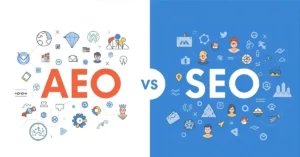
1. Prioritise “Answer-Engine” Optimisation (AEO)
Structure your content to answer the “Who, What, Where, and Why” immediately. Use the BLUF (Bottom Line Up Front) method: give the answer in the first paragraph, then provide the supporting detail.
2. Double Down on E-E-A-T
Google prioritises content with “Experience.” This means including:
- Author bios with verifiable credentials.
- Case studies specific to the Australian market.
- Unique data or insights that an AI cannot replicate.
3. Optimise for “Natural Language” Queries
Stop writing for robots. Write for how people speak into their phones or interact with Gemini Live. Use descriptive headings that mirror actual questions asked by your customers.
4. Technical Foundations: Speed and Schema
If your site is slow, it won’t be crawled efficiently. Ensure your Core Web Vitals are in the green. Additionally, use Schema Markup (Structured Data) to “talk” directly to the AI, telling it exactly what your price, location, and service offerings are.
5. Build a “Brand Entity”
SEO in 2026 is about being a recognised entity. This involves consistent branding across social media, local directories (Google Business Profile), and mentions in reputable Australian news outlets or industry blogs.
Common Mistakes Business Owners Make
- Chasing High-Volume, Low-Intent Keywords: Traffic that doesn’t convert is a drain on resources.
- Using Thin, Surface-Level Content: If an AI can write your article in 10 seconds, it has no value to Google.
- Ignoring Local SEO: For Australian SMEs, the “Local Map Pack” remains the most valuable real estate on the web.
- Neglecting Mobile Experience: With the majority of Australian searches happening on mobile, a clunky mobile UI is a death sentence for rankings.
Internal Linking Suggestions (Anchor Text Only)
- guide to local SEO in Australia
- understanding Google E-E-A-T for small business
- how to improve website loading speed
- the future of digital marketing in Sydney
FAQ: Is SEO Dead in 2026?
Q: Will AI Overviews take away all my website traffic? A: Not all, but they will reduce “informational” clicks. However, the traffic you do receive will likely be more qualified and closer to making a purchase.
Q: Should I stop doing keyword research? A: No. Keywords still help Google understand your topic. However, you should shift your focus toward clusters and search intent rather than single phrases.
Q: How often should I update my content? A: In 2026, freshness is a major ranking signal. Aim to review and update your core “money pages” every 3–6 months to ensure factual accuracy.
Q: Is backlink building still important? A: Yes, but quality is everything. One link from a reputable Australian domain (like a .edu.au or a major industry body) is worth more than 1,000 low-quality links.
Q: Does social media affect my SEO? A: Indirectly. Social signals help build your “Brand Entity,” which tells Google you are a real, trusted business.
Conclusion: The Path Forward for Australian Businesses
Is SEO dead in 2026? Far from it. It has simply matured. For the business owner who is willing to move past old-school “hacks” and focus on building genuine topical authority, the opportunities have never been greater.
The winners in 2026 will be those who provide the most clear, authoritative, and structured answers to their customers’ questions. Don’t fear the AI Overview—become the source that powers it.
Ready to future-proof your digital presence? Start by auditing your current content for “Helpfulness” and ensuring your technical foundations are built for speed and crawlability.
External References for Further Reading:
- Google Search Essentials (formerly Webmaster Guidelines)
- The ACCC Guide to Digital Platform Services Inquiry